
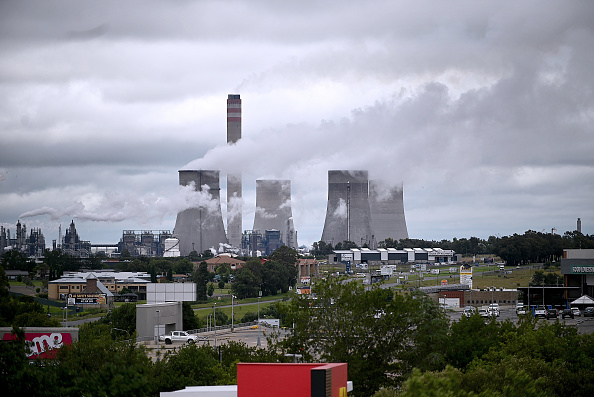
South Africans should not have to go to Paris to get answers to about a major industrial facility in Secunda. Yet that is exactly what we had to do – and we still came back without clear answers.
That matters because what happens at Secunda does not stay in Secunda. The site sits in the Mpumalanga Highveld, one of the world’s worst air pollution hotspots, where pollution from coal-fired power stations and industrial facilities, including Sasol’s operations, is linked to hundreds of premature deaths each year.
It is also the world’s largest single-point source of greenhouse gas emissions. Those emissions contribute to climate change, increasing the frequency and severity of extreme weather events like floods, droughts and heatwaves that affect livelihoods, infrastructure and the cost of doing business across South Africa.
It is precisely because of Secunda’s significance that the Competition Tribunal did not treat Air Liquide’s 2021 acquisition of 16 of Sasol’s oxygen production units as an ordinary commercial transaction. instead, it approved the deal subject to binding public interest conditions. Air Liquide and Sasol committed to cut emissions from the acquired assets by 30% within 10 years, jointly, procure up to 900 megawatts of renewable energy for the site, and direct at least half of a specified capital expenditure to upgrades within the first five years.
This was the price of approving the merger in the public interest.
The principle is straightforward: where a transaction has consequences that extend beyond the companies involved, the benefits of that transaction should also extend beyond the companies involved.
If South Africa’s flagship public interest merger can proceed without anyone being able to verify whether its conditions are being honoured, then every future ‘public interest’ condition risks becoming a promise without accountability.
Yet, five years since the merger, this is where we find ourselves.
Sasol and Air Liquide file annual compliance reports with the Competition Commission and the Department of Trade, Industry and Competition (DTIC). The reports record progress against the conditions that justified approval of the merger. Yet they remain confidential. Progress could be on track, or badly behind, and nobody outside government would know either way.
This is a problem.
And neither company is likely to volunteer that information. Companies will tend to disclose only what the law or market requires of them.
The responsibility for ensuring that public interest conditions remain meaningful rests with the Competition Tribunal, the Competition Commission and the DTIC. A public interest bargain cannot work if neither the public nor the state can verify whether it is being honoured.
For the past two years, Just Share has tried to close this gap. We engaged Air Liquide’s local subsidiary directly, we requested the compliance reports from the Competition Commission, then asking the Commission to use its legal power to decide whether the reports should be public.
Every avenue led to the same destination – confidentiality, or a regulatory gap that no institution has yet addressed.
That is why we travelled to Paris.
At Air Liquide’s annual general meeting, our question on the Secunda operation was co-filed by three French institutional investors. It achieved one important outcome. For the first time, Air Liquide publicly confirmed that emissions from the Secunda assets amounted to 6.56 million tonnes of carbon dioxide – the baseline against which the company’s legally binding 30% reduction commitment will be measured.
It took two years and a shareholder intervention in Paris to get that single figure on public record. Yet, the reports that would let anyone track progress against it remain sealed.
The following day, Air Liquide executives met with us privately. They reiterated their confidence that the company would meet its commitments. At the same time, they confirmed that the compliance reports submitted to South African regulators are not reviewed at Group level.This means that the parent company listed in Paris does not itself examine the documentation that records compliance with a legally binding South African climate commitment. They also acknowledged that decarbonising operations in countries with coal-dependent electricity systems presents significant challenges.
Back in South Africa, the local subsidiary again pointed us back to the regulators – insisting that it was the DTIC’s and the Commission’s responsibility to decide what information should be made public. At the same time, the subsidiary declined to consent to release what reports it has already filed.
That passing of the buck – Paris to Johannesburg, Johannesburg to the regulator, the regulator to rules that have never been finalised – is the real story.
This is not simply a story about two companies with limited incentives to disclose more than they are required to. It is a story about whether South Africa’s public interest merger regime can deliver on its promise.
Public interest conditions only protect the public if someone can verify that they are being met. Otherwise, they become little more than promises made behind closed doors.
South Africans should never have had to travel to Paris to ask whether a merger approved in South Africa’s public interest is delivering on its promises. Until transparency becomes part of the bargain, they may have no choice.
Déna Jansen and Joylyn Mutata are analysts at Just Share.