
An edited version of this op-ed was first published by Business Day on 11 May 2026.
The gig economy works perfectly. Just not for workers.
There has been a profound shift in South Africa’s world of work, driven by the rapid expansion of platform-based labour in an increasingly digital economy. Jobs that once followed a clear and stable structure are becoming more uncertain, with less clarity about who the employer is and what protections workers can rely on. Platform work promises consumers speed and convenience, and workers flexibility. But beneath this lies a deeper restructuring of how work is organised, controlled, and governed.
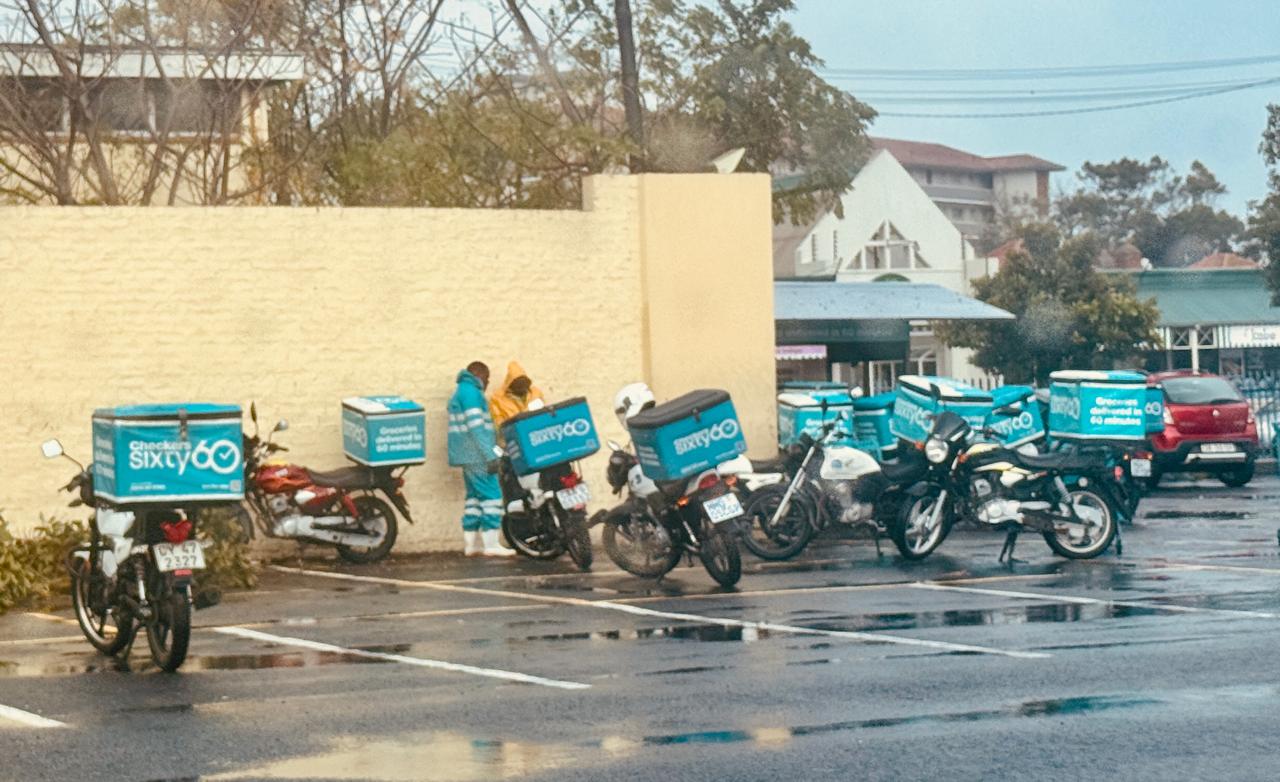
For most South Africans, this shift is already woven into daily life. You tap your phone and a meal arrives via Uber Eats or Mr D within minutes. Groceries show up at your door through Checkers Sixty60, Woolworths Dash or Pick n Pay’s asap!. You request a ride through Uber or Bolt and a driver appears almost instantly.
It feels seamless. Loyalty points, vouchers, and algorithmically timed nudges keep us engaged. But that convenience is not incidental. It is engineered.
Behind it is a vast, largely invisible workforce managed not by supervisors, but by digital systems. Platforms allocate work through algorithms, set prices, track performance in real time, and discipline workers through ratings and deactivation. What is presented as flexibility is, in reality, a tightly managed labour process where control is exercised through code, and risk is externalised onto the worker.
This transformation is not neutral. It reflects a deliberate reorganisation of employment that allows companies to retain control over labour while shedding the obligations that typically accompany it. At the centre of this model is the classification of workers as “independent contractors”, even where the substance of the relationship reflects dependence and control. The result is a growing workforce excluded from minimum wage protections, social security, occupational health and safety, and collective bargaining rights.
Labour law has not kept pace. While platforms coordinate labour at scale, the legal framework still hinges on formal classifications that fail to capture how work is actually structured. The consequence is a widening gap between the reality of work and the scope of protection.
This is where precarity enters. Platform workers carry the costs of fuel, vehicle maintenance, and insurance. They absorb income volatility and the risks of accidents, often without meaningful recourse. A significant share of delivery drivers are foreign nationals, concentrated in the most insecure segments of the labour market, with limited bargaining power and no effective collective voice. Yet they are indispensable to how these business models function.
South Africa has long recognised this problem, but has consistently failed to resolve it.
As far back as 2017, the Department of Labour acknowledged that platform work raised fundamental questions about employment status and the adequacy of existing laws. Those questions remain unanswered. The CCMA initially found that Uber drivers were employees entitled to protection, only for the Labour Court to overturn that finding and affirm their classification as independent contractors.
That judgment entrenched a model in which companies can exercise significant control over work without assuming responsibility for workers. Even Uber drivers, often held up as flexible, operate under conditions determined by the platform, from pricing to performance management. Delivery drivers, particularly in retail platforms, face even tighter control and deeper economic dependence, yet remain equally excluded.
Elsewhere, regulators have begun to confront this reality.
In the United Kingdom, Uber drivers have been recognised as “workers” entitled to basic protections. In the European Union, the Platform Work Directive introduces a rebuttable presumption of employment where control is present, alongside rules on algorithmic transparency. In the United States, the economic reality test centres dependence rather than contractual form. The International Labour Organization is advancing standards that emphasise substance over labels.
Across these approaches, the principle is clear: companies cannot contract out of labour rights where the reality points to employment.
South Africa has not yet made that shift. The Labour Law Amendment Bill, published for comment in early 2026, does not resolve the central problem of misclassification. Proposed section 9B of the BCEA introduces protections for on-call and zero-hours work, including rules on notice, cancellations, and compensation. But these provisions regulate insecurity within recognised employment relationships. They do not address the threshold question of who qualifies as an employee.
The Labour Relations Amendment Bill goes further, extending certain collective rights to a broader category of workers and introducing a limited rebuttable framework. But this remains partial. It does not confer the full spectrum of protections, does not adequately address intermediated work arrangements, and does not engage with algorithmic management as a form of control.
This is the gap. The Constitution guarantees the right to fair labour practices. These are not abstract commitments. They require that labour law respond to how work is actually organised.
At its core, the problem is misclassification. As long as workers who are controlled and economically dependent are treated as independent, they will remain excluded from protection.
What is at stake is the trajectory of South Africa’s labour market. If left unresolved, the law will continue to legitimise a model in which firms retain control, extract value, and shift risk onto those least able to bear it.
But this is a choice. Platform-based models are here to stay. They can deliver real value. There is no justification for that value to depend on the erosion of basic labour protections. The task for law is clear: confront the reality of control, dependence, and accountability, rather than defer to contractual labels that obscure it.
Kwanele Ngogela is a Senior Inequality Analyst at Just Share.