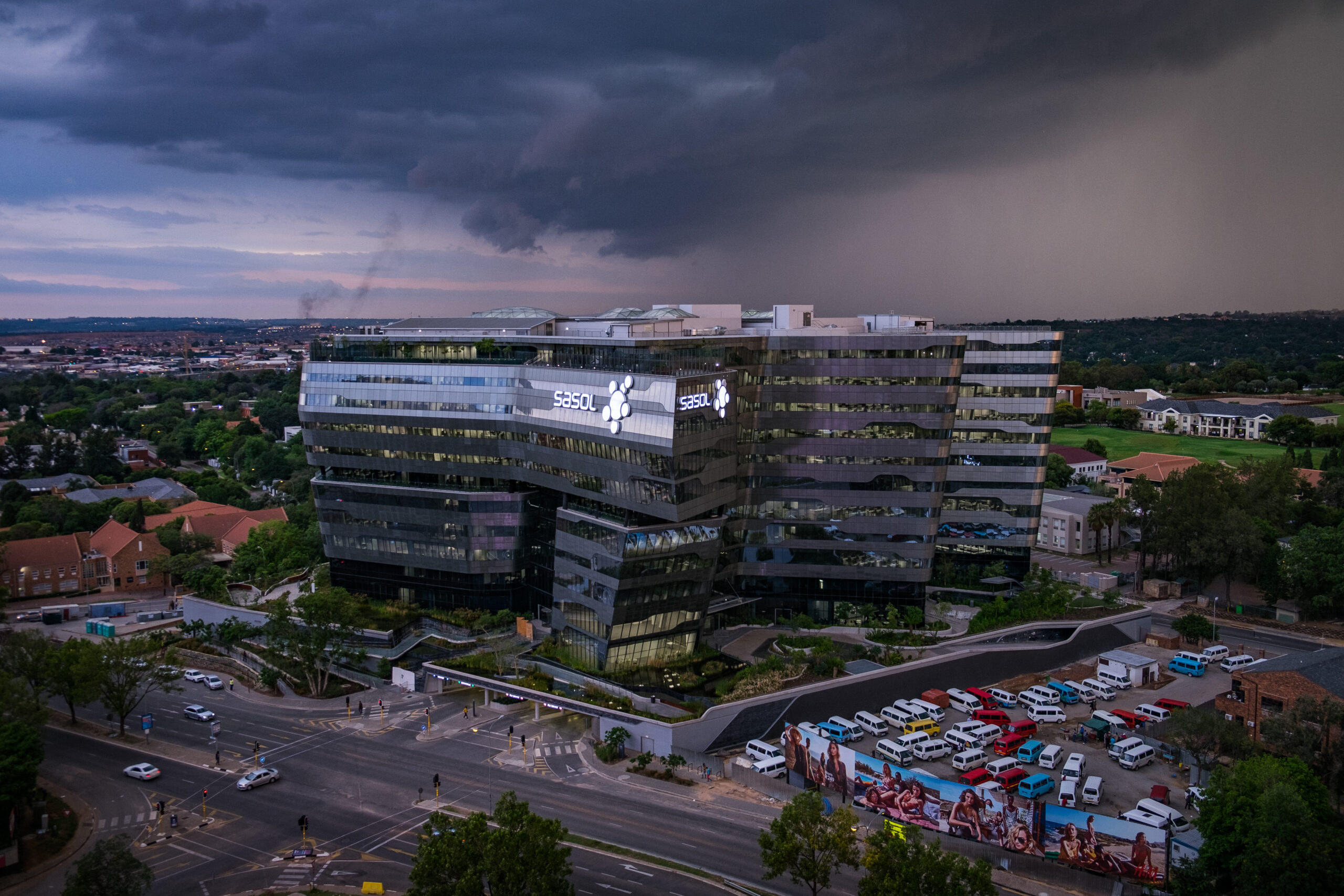
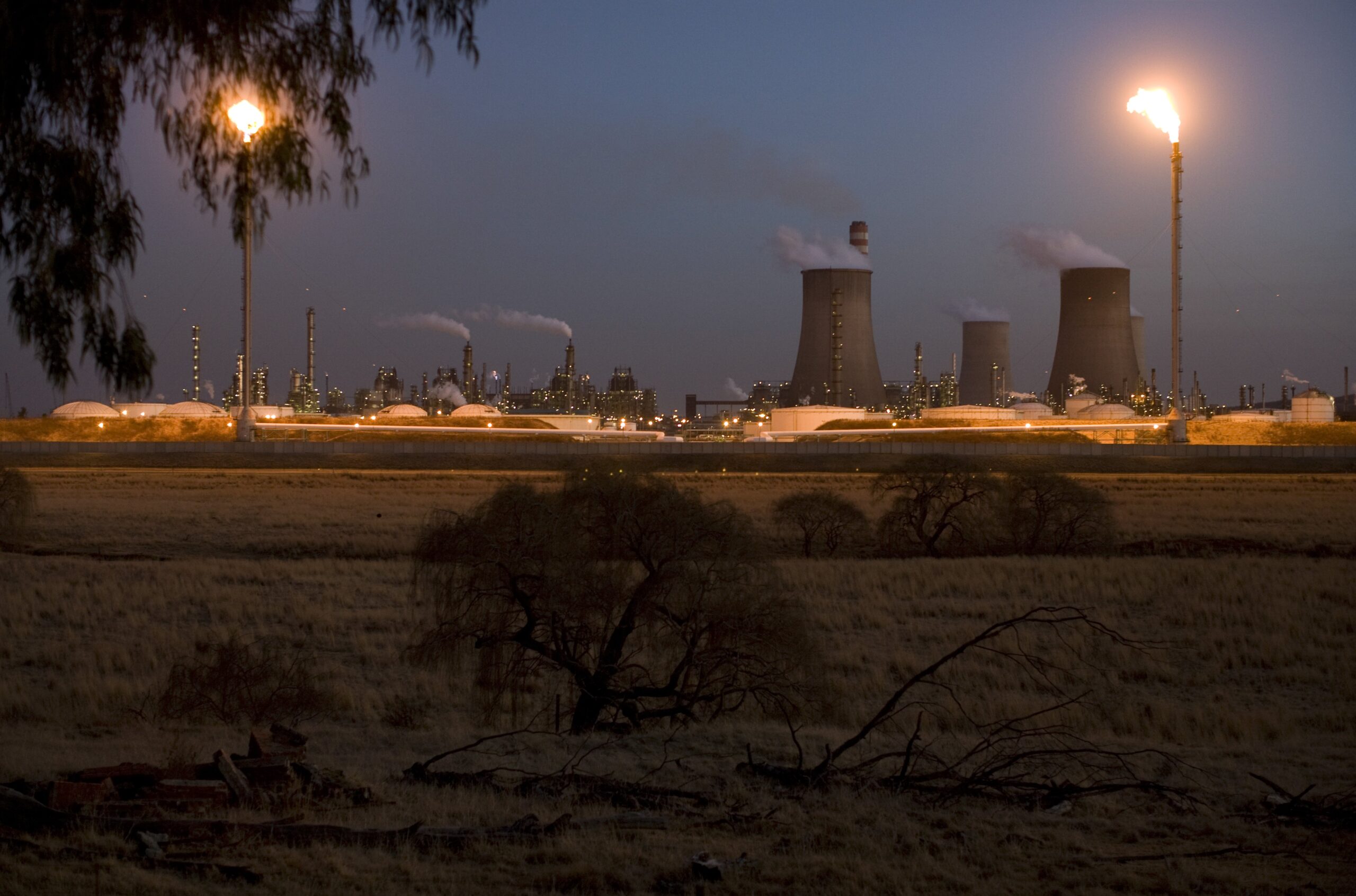
SECUNDA, 7 September 2026 – The Highveld grassland region of South Africa has been home to mankind for millions of years. For the last 50 years, it has also been home to Sasol Secunda Operations, the worldʼs largest point-source emitter of greenhouse gases. This facility is also responsible for the rotten egg smell that can be a persistent feature of daily life for local residents and on occasion travel as far as Johannesburg and Pretoria — 150 km away — due to the transboundary nature of air pollution.
On this International Day of Clean Air for Blue Skies, the Centre for Research on Energy and Clean Air (CREA) has published a report that reveals that the stench that haunts more than 20 million Highveld residents is only the tip of a highly toxic iceberg that contributes to an estimated 1,000 deaths every year.
The far-from-benign rotten-egg-smell episodes are due to industrial emissions from Sasol Secunda Operations, which in 2024 alone emitted an estimated 112 kilotonnes of sulphur dioxide (SO₂), along with significant amounts of hydrogen sulphide (H₂S).
Sasol Secunda Operations falls within the Highveld Priority Area (HPA), designated in terms of South Africaʼs Air Quality Act as an area with significant air pollution requiring specific air quality management action.
ʻPeople living in the Highveld have been concerned about industrial smells for many years. This analysis helps put those experiences into a broader public-health context, showing that what people can smell is only part of the pollution they are exposed to. The findings provide a clearer picture of the health impacts that matter to communities and health professionals in the region, and their costsʼ, said Mafoko Phomane, Environmental Health Campaigner from groundWork.
ʻAs the Sasol Secunda Operations in the Highveld continue to run under ʻalternativeʼ sulphur dioxide emissions limits, the government of South Africa is not upholding the constitutional rights of its people. This failure is contributing to the disabilities and deaths of thousands in South Africa and costing the country billions. Emission limits in South Africa must be strengthened, monitored, and enforced for all pollution operators and not on a selective basisʼ, Phomane emphasised.
Sasol is widely regarded as one of South Africaʼs industrial powerhouses, providing jobs, around 30% of the countryʼs domestic fuel demand, and millions of tonnes of chemical products to customers in more than 100 countries each year. Yet the health impacts of these operations are estimated to cost the South African economy approximately USD 1.0 billion (ZAR 19 bn) each year. These costs include adverse birth outcomes, illness, disability, healthcare, work absence and productivity losses associated with exposure to the operationsʼ emissions, and death.
The impacts of air pollution hit children the hardest, which also has an impact on future generations. CREAʼs analysis shows that, in 2024, emissions from Sasol Secunda Operations contributed to an estimated 1,100 preterm births, as well as increased risks of low birthweight, further adverse birth outcomes, and later, an increase in the burden of childhood asthma.
ʻIndustrialisation is oken seen as a driver of economic development. But there is also a hidden economic cost in the pollution it produces. We need to account for these costs when considering the full economic impacts of industrial activityʼ, said Daniel Nesan, lead author of the report and Analyst at CREA.
South Africaʼs Minimum Emission Standards (MES) are intended to limit emissions of toxic pollutants from industrial facilities and protect public health. Yet South Africaʼs standards are much more lenient than China, the EU, and South Korea. Despite this, Sasol Secunda has been granted alternative SO₂ limits that allow substantially higher emissions than the MES would permit. These alternative limits are in place until April 2030, with Sasol stating that it might seek further leniency after this date.
In addition, and despite being granted significant concessions over the years, Sasol has instituted litigation seeking to set aside the provisions of the HPAʼs air quality management plan and implementation regulations that require it to achieve emissions reductions of 40% by 2030.
ʻSouth Africaʼs emission standards are already weaker than those in other developing countries, yet Sasol Secunda has been allowed to operate under limits that are even more lenient. This raises fundamental questions about whether the regulatory system is providing the level of protection that communities should expect and that is legally required to protect constitutional rights, and whether the environmental and social risks of these operations are being adequately accounted forʼ, said Robyn Hugo, director of climate change engagement, Just Share.
ʻSasol is disregarding its responsibilities to limit its emissions, despite Sasol Secunda Operations being located in the heavily-polluted Highveld Priority Area and despite confirmation, in the Deadly Air litigation, that air pollution in the area violates constitutional rights and that binding emission reduction goals are requiredʼ, Hugo continued. ʻAll stakeholders concerned, from local Secunda communities and officials to those in Johannesburg, as well as the Minister of Forestry, Fisheries and the Environment and Sasolʼs investors, should demand that Sasol: 1. significantly reduce its toxic pollution to safeguard the future health and economy of the region and the country; and 2. withdraw the litigation in which it seeks not to be bound by priority area emission reduction targets.ʼ
The Centre for Research on Energy and Clean Air (CREA) recommends that South Africaʼs Minister of Forestry, Fisheries and the Environment:
- review Sasol Secundaʼs alternative SO2 limits, taking into account their impacts on air quality, population exposure and health;
- require binding annual emissions reductions across the entire Sasol Secunda complex, covering SO2, NOX, particulate matter and H2S;
- strengthen emissions reporting and independent monitoring, with data made publicly available;
- strengthen South Africaʼs air-quality regulations to better protect human health; and
- put affected communities at the centre of emissions enforcement and Highveld air-quality
-End-
Contacts
Daniel Nesan, Analyst, CREA, daniel@energyandcleanair.org
Robyn Hugo, Director, Climate Change Engagement, Just Share, rhugo@justshare.org.za
Notes to editors
The report related to the press release can be found here.
All CREA publications can be found here: energyandcleanair.org/publications
About CREA
The Centre for Research on Energy and Clean Air (CREA) is an independent research organisation focused on revealing the trends, causes, and health impacts, as well as the solutions, to air pollution. CREA was founded in December 2019 in Helsinki and has staff in several Asian and European countries. The organisationʼs work is funded through philanthropic grants and revenue from commissioned research.
About the methodology
Annual emissions for Sasol Secunda were taken directly from Sasolʼs self-reported Performance Data for the Financial Year Ended 30 June 2025. The 2024/2025 financial year was selected because it was the most recent complete 12-month reporting period for which consistent, facility-wide emissions data were available for all pollutants included in the modelling. It therefore provides the most up-to-date representation of the facilityʼs operations while capturing seasonal and operational variations across a full year.
We simulated air pollutant concentrations using the CALPUFF air dispersion model, version 7. CALPUFF has been a widely used industry standard model for long-range air quality impacts of point sources. Due to its ability to capture complex chemical processes and atmospheric transport of pollutants, this modelling system is approved for use by regulators, such as the Maryland Department of the Environment, and in academic research. The model has been evaluated extensively by the US Environmental Protection Agency, is open-source, and fully documented.
Find the full methodology in the report.