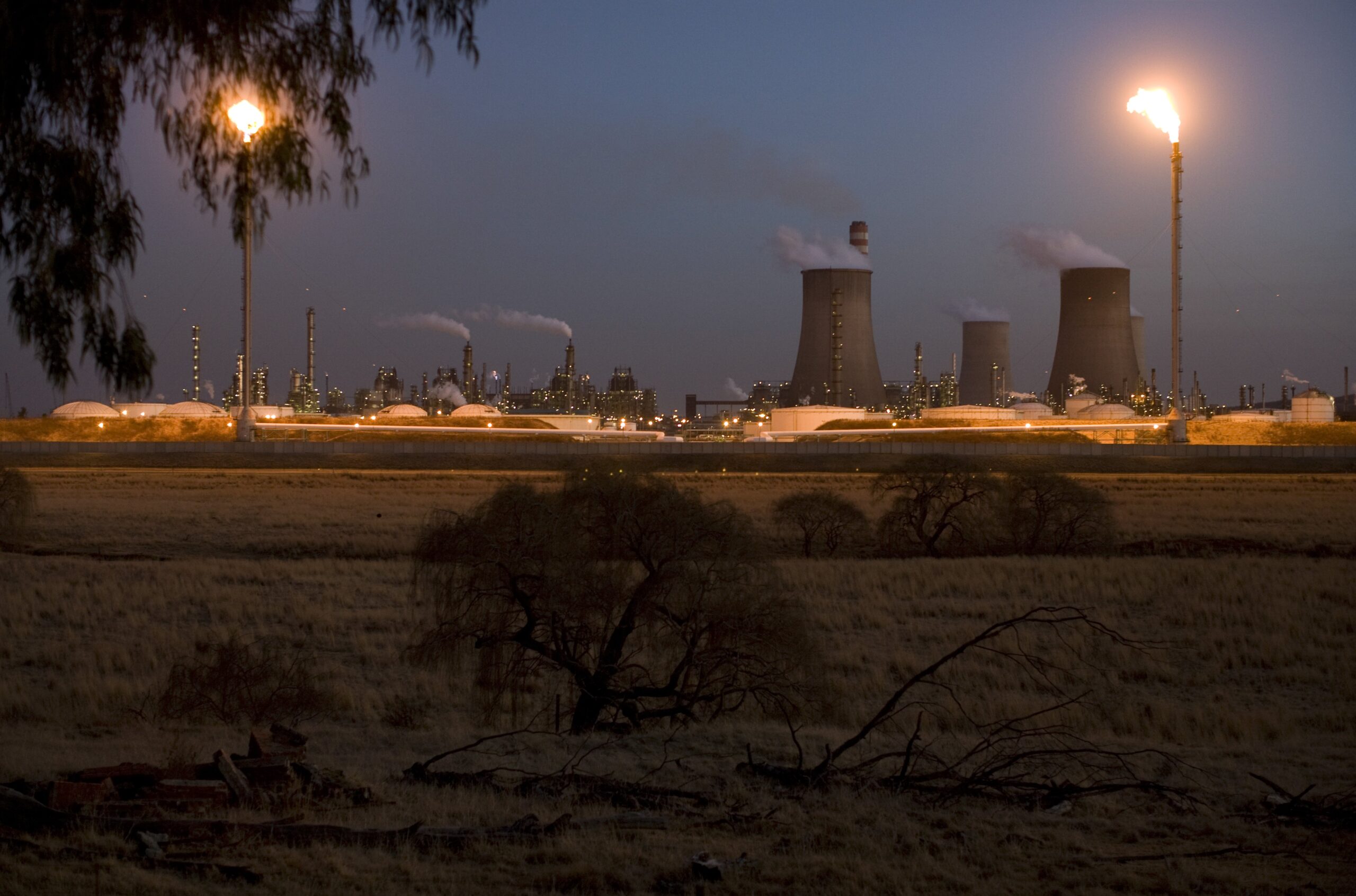

Sasol generates billions in earnings, supports jobs and tax revenues, contributes significantly to GDP, and its highly-integrated operations underpin important parts of the country’s fuel, chemicals and plastics value chains. Its scale and economic contribution are significant, and for a country facing deep unemployment and inequality, they matter.
But these positive impacts do not justify reduced scrutiny. On the contrary, the more economically significant a company is, the more important it is for stakeholders to understand the full consequences of the way it does business.
That means asking a harder question about Sasol’s contribution to the economy: what is the balance between the value it creates and the costs imposed in creating it?
The question is particularly urgent in the Highveld, where Sasol’s Secunda Operations are a major source of air pollution. A recent health impact assessment by the Centre for Research on Energy and Clean Air (CREA) estimated that emissions from Sasol Secunda contributed, in 2024, to around 1,000 premature deaths each year, 1,100 preterm births and increased risks of low birthweight, other adverse birth outcomes and, later, childhood asthma. The associated health and economic costs were estimated at about US$1 billion (R19 billion) a year, including healthcare costs, illness, disability, work absence, lost productivity and premature death.
These are extraordinary costs and impacts. And they lay bare an uncomfortable paradox: Sasol is creating substantial economic value for shareholders, workers and the wider economy and simultaneously imposing substantial, largely unpriced costs on communities, the healthcare system, the economy and the environment.
Sasol reports compliance with its atmospheric emission licence, but this does not make the resulting pollution levels, harm to health and economic costs acceptable. South Africa’s minimum emission standards (MES) are intended to establish minimum safeguards against toxic emissions that may significantly harm health, social and economic conditions and the environment. Sasol’s facilities are located in air pollution priority areas where air quality management plans (AQMPs) seek to address precisely these harms. Companies operating in these areas should be required to meet stricter emission limits than South Africa’s weak MES.
Yet Sasol has repeatedly obtained concessions from government on compliance with those standards. Most recently, in 2024, it was granted an alternative emission limit for sulphur dioxide from its 17 coal-fired boilers at Secunda until March 2030 — a substantially more lenient limit than the applicable MES. The National Air Quality Officer had refused its application, but the decision was overturned on appeal by the Minister of Forestry, Fisheries and the Environment, despite the significant health impacts of granting this alternative limit.
In late 2025, and notwithstanding the MES concessions already granted to it, Sasol instituted litigation in which it seeks not to be bound by emission reduction targets in the 2024 Regulations for implementing and enforcing AQMPs, or the Highveld Priority Area (HPA) AQMP.
This matters because the country’s courts have already recognised the importance of making such plans legally enforceable. In the Deadly Air case, the Supreme Court of Appeal identified “the negative attitudes from major polluters who did not consider the [AQMPs] as binding” as the main reason that implementation of the HPA AQMP had failed.
The issue, then, is not simply whether Sasol creates economic value while causing environmental and health impacts. It is whether a company of Sasol’s importance should be allowed to continue externalising those costs while using every available regulatory and legal avenue to preserve the operating conditions that generate them.
That should concern investors, government and all those who depend on Sasol’s economic contribution.
Sasol’s significance to the country makes the case for greater scrutiny stronger, not weaker. If its operations underpin critical parts of the economy, then poor strategy, inadequate disclosure or a delayed transition away from high-emitting activities have consequences far beyond the company itself. Equally, if Sasol can successfully transition in a way that protects jobs, strengthens industrial value chains and reduces its environmental footprint, the benefits could be substantial.
To evaluate Sasol’s true value – and its value at risk – decision-makers therefore need a much fuller picture than Sasol’s current reporting provides. They need to understand, for example:
- What are the health, environmental and social costs associated with the value generated from Sasol’s earnings, jobs, taxes and economic contribution?
- How durable is Sasol’s positive contribution likely to be as the world transitions to a lower-carbon economy?
A company as successful and economically significant as Sasol should strive to answer these questions. Government should demand it. Investors should expect it. And communities affected by its operations are entitled to these answers.
Determining whether Sasol can thrive without its success being premised on costs borne by everyone else must start with a much more honest accounting on both sides of the ledger: what Sasol contributes, what its operations cost society, and what it is doing to ensure that the balance improves.
Robyn Hugo is the director of climate change engagement at Just Share.