
This article was first published by Project Syndicate on 17 April 2026.
The global fallout from the Iran war demonstrates once again that for investors, fossil fuels are not just another commodity exposure, but a geopolitical liability. Oil and gas prices have always been structurally unstable, such that supply disruptions anywhere can trigger sudden economic shocks everywhere. And because oil sits at the center of the global energy system, volatility spreads quickly through the financial system.
The consequences are particularly acute for African economies, whose currencies come under pressure whenever oil prices surge. Every additional dollar per barrel increases import costs and tightens foreign-exchange constraints. The South African rand, the East African shilling, and many other currencies bear the brunt of the shock.
The same dynamic then exposes a deeper problem for banks and institutional investors. Although financing for fossil fuels is often framed as a way of supporting energy security or economic development, it often produces the opposite effect, entrenching dependence on a volatile global commodity whose price responds to conflicts thousands of miles away.
The implications for fiduciaries are far-reaching. Trustees, directors, and asset managers must act in the best interests of their beneficiaries. They are required to manage risk prudently and protect long-term value, which in practice means building portfolios that can withstand geopolitical shocks and structural economic change.
Fossil-fuel exposure increasingly runs afoul of this obligation. After all, the volatility we have seen during this latest crisis is not an anomaly. It is a structural feature of the fossil-fuel system. Oil prices respond immediately to geopolitical tensions, sanctions, shipping disruptions, and political instability. Investors who rely on stable energy markets are therefore betting on continued geopolitical calm. That is not a responsible or sustainable investment strategy.
The Iran conflict highlights another growing risk: stranded assets. Investors often treat this as an issue that may arise decades from now as the energy transition proceeds. But recent events suggest the risk may materialize much sooner. When oil prices skyrocketed in early March, many African economies simply could not afford the imports. Energy costs rose sharply, utilities struggled to pay suppliers, and governments faced mounting fiscal pressure. Under these conditions, fossil-fuel infrastructure could become economically stranded long before the end of its expected life. If customers cannot afford the fuel, the asset stops delivering reliable returns today, not in 20 years.
A related challenge is financial stranding. Many major African banks—including Standard Bank Group, Nedbank Group, and FirstRand Limited—have already introduced limits on coal and oil exposure by 2026. As climate regulations and lending policies tighten, investors entering new fossil-fuel projects may struggle to exit them, because they will be trapped in illiquid assets that no one wants. In fact, according to Africa Energy Risk Signals, fossil-fuel investments in Africa have already fallen by half in the last five years.
These pressures accompany a broader legal shift. Around the world, financial institutions face rising scrutiny over climate risk and fiduciary duty. Shareholder resolutions increasingly challenge fossil-fuel financing, and climate litigation continues to expand. Regulators now expect detailed disclosures of climate-related financial risk.
In this environment, business as usual begins to look less like a strategy and more like negligence. Fiduciary duty today requires financial institutions to consider not only current returns but also the structural risks embedded in the global energy transition. Are directors, trustees, and managers who ignore these risks fulfilling their duty of care?
Of course, transparency is central to fiduciary responsibility. Investors cannot manage unacknowledged risks. Yet disclosure remains uneven. If financial institutions cannot fully account for their exposure to fossil fuels, they cannot properly assess the risks those assets pose to their balance sheets.
Nor is disclosure enough. Fiduciary duty requires investors to act on the information they possess. If the data show that fossil-fuel volatility is destabilizing currencies and long-term portfolios, maintaining heavy fossil-fuel exposure becomes inconsistent with prudent stewardship, and prudence demands a strategic reallocation of capital toward more resilient and sustainable alternatives.
Renewable energy assets have exactly the characteristics that long-term investors need. Solar and wind projects operate with predictable cost structures. Once built, they do not depend on volatile global commodity prices. Long-term power-purchase agreements can provide stable and reliable cash flows. And for African economies, the benefits extend even further, because expanding renewable energy reduces dependence on imported fossil fuels priced in US dollars. Generating electricity locally strengthens energy security and protects currencies from global oil-price shocks.
In this sense, investing in renewable energy is both an infrastructure strategy and a financial hedge. Far from being “alternative,” it increasingly provides the stability that institutional portfolios need. It is fossil fuels that carry the risk and uncertainty of alternative bets.
African financial institutions have come to a strategic crossroads: they can continue defending fossil-fuel exposure, risking breaches of their fiduciary duty, or they can accelerate the reallocation of capital toward energy systems that strengthen economic resilience and provide more predictable long-term returns.
The choice is obvious. Banks and institutional investors across Africa must accelerate the financing of renewable-energy projects, transmission and grid infrastructure, and distributed energy markets that expand electricity access while reducing reliance on imported fuels. Such investments would be in keeping with their beneficiaries’ interests, align portfolios with the continent’s long-term infrastructure needs, and reduce exposure to geopolitically driven energy shocks.
The current conflict is merely the latest reminder that the fossil-fuel system’s turbulence is not a cyclical inconvenience but a structural feature. Fiduciary duty has always required investors to distinguish between risks that can be managed and risks that cannot be justified. Drawing that distinction is now unavoidable for fossil-fuel investments. The question is not whether African capital should reposition, but whether institutions will act before events compel them to do so.
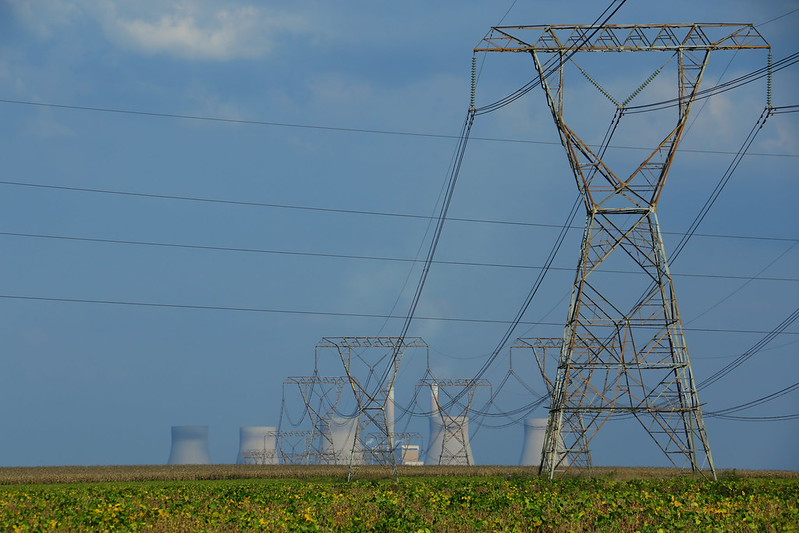
IMAGE: Clint Mason, Flickr (CC)
Nicole Martens is Executive Director of Just Share.
