
South Africa’s industrial gases sector continues to be largely invisible in mainstream climate discourse despite its energy-intensive operations and its role in enabling emissions across multiple heavy industries. Because the sector operates in the background of industrial process, its climate relevance is often overlooked.
Just Share’s new briefing details the invisible role of a French industrial gas company Air Liquide in the material operation of the petrochemical giant Sasol and what it means for South Africa’s climate transition.
The briefing outlines the lack of verifiable commitment to the public interest conditions of the 2021 merger between Sasol and Air Liquide, that gave Air Liquide sole operational control of Sasol’s 17 air separation units of its oxygen production system at Secunda.
The legally binding conditions set out by the Competition Tribunal include a commitment to reduce carbon emissions from the acquired assets by 30% by 2031, using 2020 data as the baseline. Both the baseline figure and annual compliance reports against this commitment have not been publicly disclosed which makes independent verification of progress structurally impossible.
If industrial gases are the hidden backbone of heavy industrial processes, then their emissions – and the role they play in enabling other emissions-intensive industries – cannot remain in the shadows. Despite the scale of Sasol-Air Liquide merger commitments, the absence of transparent, site-level disclosure makes it impossible to assess progress. For investors and the public, this lack of transparency is a serious concern.
Despite exceeding the Tribunal’s original 900 mega-watt renewable energy target, Just Share’s direct communication with Air Liquide confirmed that the company’s average renewable load factor is only in the range of 30%-35% for wind power and 19%-21% for solar power. Because the Secunda plant runs continuously, this means that even at full contracted capacity, the site will still rely on Eskom’s coal-fired electricity for roughly 65%-80% of its operating hours.
Secunda is the world’s largest single point source of greenhouse gas emissions and Air Liquide’s oxygen production operations are central to this footprint, yet the company does not have a regionalised transition plan for South Africa, let alone a site-specific plan for this site.
Air Liquide’s own 2024 Climate Transition Plan and 2025 integrated report do not identify South Africa as a distinct reporting geography and do not reference its Competition Tribunal commitments.
Air Liquide’s Secunda operations face coal exposure risk on two fronts: seven coal-powered steam-driven units and ten electricity-powered units that draw from South Africa’s 80% coal-based grid which makes it a carbon-intensive industrial site.
Greater transparency is therefore essential. Site-level emissions reporting, clear interim milestones and public disclosure of merger compliance would allow investors, regulators and citizens to assess progress. Without these measures, the world’s largest single point source of emissions risks remaining a black box.
Just Share will be attending the Air Liquide’s upcoming AGM and call on the company to do the following:
- Publish a time-bound transition plan for its carbon-intensive South African assets that addresses both its coal-fired electricity dependence and the future of its seven steam-driven units.
- Disclose site-specific Scope 1 and Scope 2 emissions data for its Secunda operations.
- Confirm the 2020 emissions baseline against which its Tribunal commitment is measured.
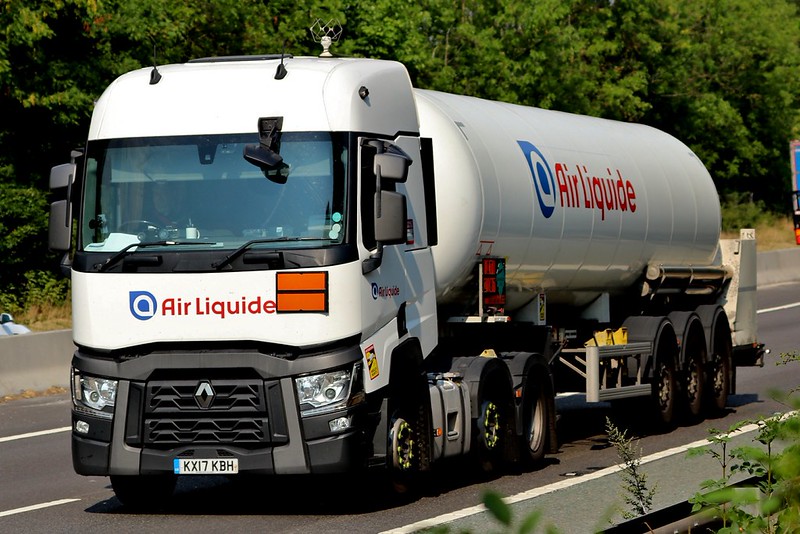
IMAGE: Richard Says, Flickr (CC)
