Multiple sources have indicated that Minister of Energy and Electricity, Kgosientsho Ramokgopa, is developing a proposal to suspend the country’s carbon tax, and that the National Treasury has been asked to motivate why the tax should be retained. Suspending the carbon tax would be a short-sighted and ill-informed move.
A group of civil society organisations, academics and experts has written to the Presidency asking for a meeting to discuss these deeply concerning reports. No response has yet been received to this letter.
Sustained anti-climate corporate lobbying has already significantly diluted and delayed South Africa’s carbon tax, which commenced in June 2019, having been initially proposed in 2006. Consistent industry opposition has meant that the carbon tax remains one of the lowest in the world, which has reduced its intended impact on greenhouse gas emissions. Phase 2, which was initially intended to commence from 1 January 2023 and should have strengthened the impact of the tax, is still not in operation.
Big emitters lobbying against the carbon tax do not act for the benefit of the majority of people in South Africa, but instead represent a narrow set of vested interests.
As set out in the op-ed below by Tracey Davies and Harald Winkler, which was published in Engineering News on 13 February 2026, if polluters don’t pay for the impacts of their emissions, the rest of us will.
We urge South Africans to make 300-word submissions to the Minister of Finance, Enoch Godongwana, by today, calling on him to retain and strengthen the carbon tax.
Polluters must pay, or we all will
There are credible reports that Electricity and Energy Minister Kgosientsho Ramokgopa is working on a proposal to suspend the carbon tax, and that National Treasury has been asked to motivate why the tax should be retained.
Suspending the tax would be a disastrous move for South Africa’s economy. Pricing carbon has multiple economic benefits. It is an efficient way to incentivise behavioural change by big emitters that reduces greenhouse gas (GHG) emissions. It ensures that the cost of carbon is borne by the polluters who produce it rather than the economy and society more broadly. It raises revenue which can be spent to ensure poor households benefit, and on climate mitigation and adaptation measures.
Appropriate climate-related interventions have been debated repeatedly in South Africa since at least 2005, and a decade-long stakeholder engagement process preceded the 2019 introduction of the Carbon Tax Act. The proposal that the tax should be suspended is a bolt from the blue, and its advocates are not acting in the best interests of the county.
Corporate lobbying against the carbon tax
South Africa’s biggest emitters have a clear, short-term interest in avoiding a carbon tax. Sasol, Eskom, the Minerals Council South Africa, Business Unity South Africa and others have successfully lobbied to delay climate action, and government has repeatedly capitulated.
While claiming to agree with the need for climate policy in principle, these entities consistently work to undermine its efficacy and implementation. It appears that this approach has now found favour with Minister Ramokgopa, who is in a powerful position to advance their agenda with the Cabinet.
The rationale for a pause of the tax seems to be based partly on the argument that to date, it has been ineffective in driving decarbonisation and is therefore unnecessary. The irony of this is that its “ineffectiveness” is a direct consequence of those same vested interests lobbying to undermine it.
It appears that government is especially receptive to the fossil fuel lobby at present. Several ANC ministers are self-proclaimed coal advocates and climate sceptics, and the DA, which has big business as a core constituency, likes to position itself as anti-tax. The new, controversially appointed Minister of Forestry, Fisheries and the Environment has no prior record to indicate that he understands or is committed to climate action and environmental justice.
Big emitters pay a little, Eskom not at all
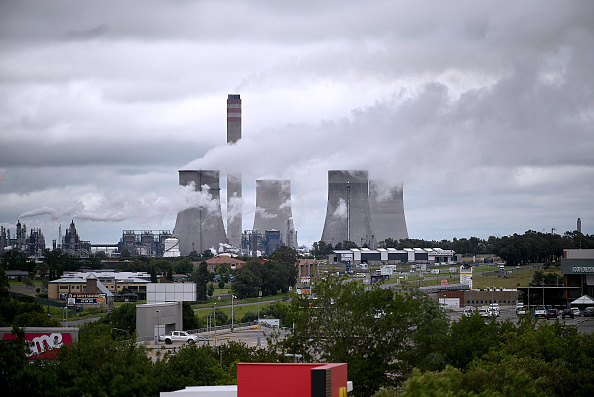
Only a handful of entities pay any significant amount of carbon tax (the biggest emitters, like Sasol), and there are very few companies whose competitiveness is affected by it.
The carbon tax has had no influence on the price of electricity to date, because Eskom’s carbon tax liability has been offset using the environmental levy on non-renewable electricity and the renewable energy premium. There is therefore no pass-through of carbon costs to the electricity price. While the mechanism for offsetting is set to change from 2026, the effect will be the same until at least 2030, i.e. the electricity supply industry will continue to be shielded from the tax.
Positioning SA for future global economy
Our country should take a proactive approach, not roll back the law. The carbon tax is overdue to enter its second phase, in which rates should be increasing significantly to “provide a strong price signal to both producers and consumers to change their behaviour over the medium to long term” – i.e. to finally give effect to the polluter pays principle. However, in 2025 National Treasury weakened its Phase 2 proposals in the face of concerted pressure from high emitters.
In even considering rolling back climate action by suspending the tax, politicians are showing an alarming lack of vision. Prioritising the short-term interests of the fossil fuel industry will not prevent the physical realities of climate change, nor the economic impacts of policies like the European Union’s Carbon Border Adjustment Mechanism, which will affect our import and export markets. It will also put at risk the support of the countries which have pledged to finance the just energy transition via the Just Energy Transition Partnership.
Suspending the carbon tax would be a reckless, self-defeating retreat that shields a handful of high emitters while leaving the rest of the country to pay the price. South Africa must stay the course and seize the enormous opportunities that decarbonisation offers – not surrender to the will of a few industry players who lack the courage or vision to compete in a low-carbon economy.
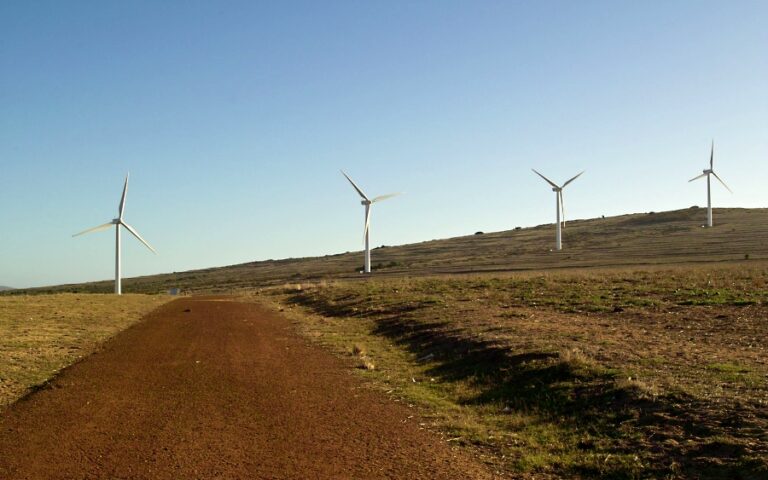
It is firmly in our national interest to act on climate. Rolling back the carbon tax is not only backward-looking, it is futile. Clean energy investment now dwarfs investment in fossil fuels, and the gap is widening. The opportunities in decarbonisation are enormous: renewable energy is inexhaustible by definition, and the countries that move decisively now will reap the rewards for decades to come. South Africa cannot afford to be left behind: it must be bold, forward-looking, and committed to climate action.