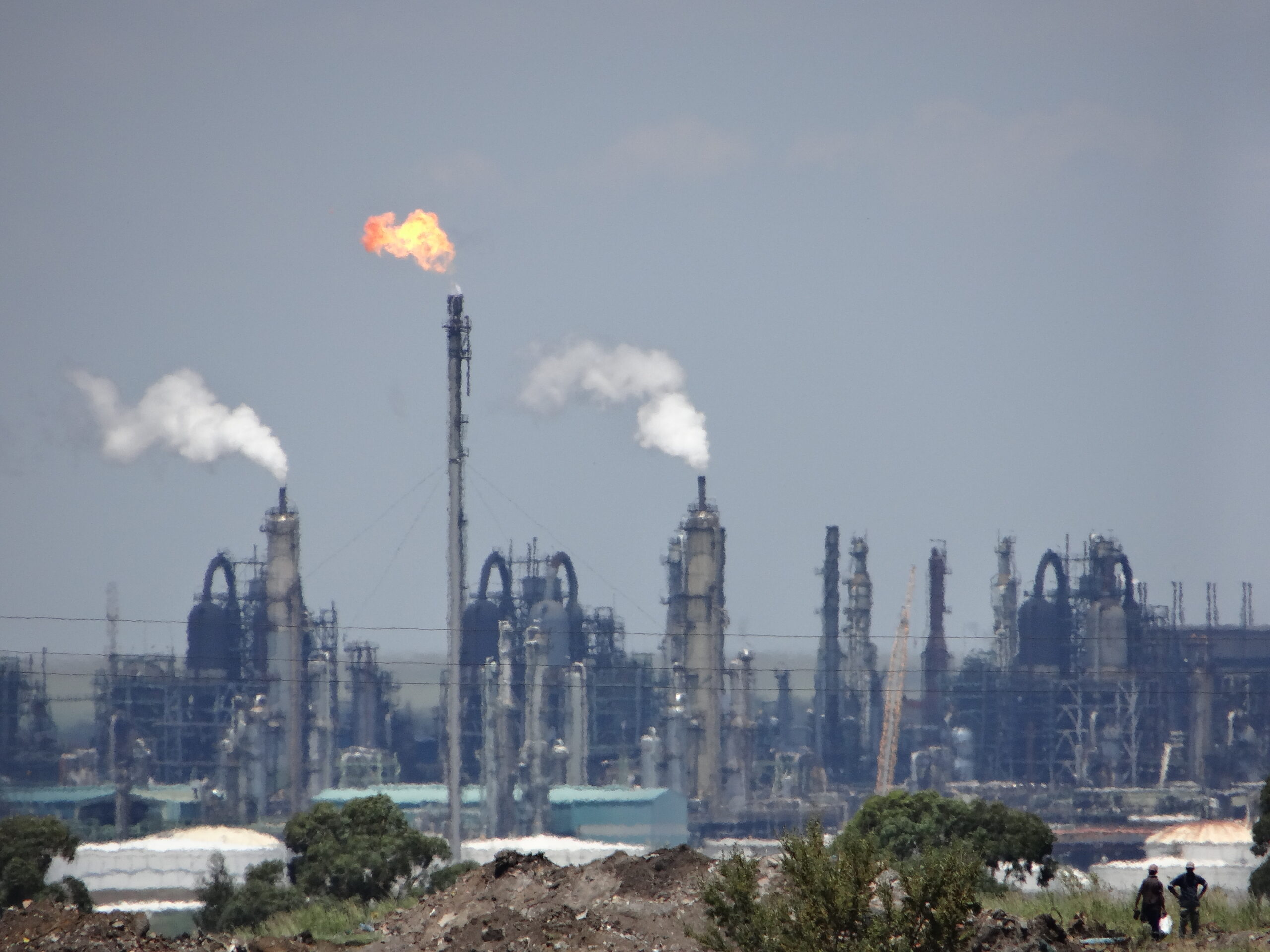
Ahead of Sasol’s 13 November annual general meeting (AGM), Just Share is calling on shareholders to vote against the company’s remuneration policy and remuneration implementation report, citing inadequate accountability for delivery against its climate and just transition commitments.
In Just Share’s recent investor briefing, we highlighted our ongoing concerns about various aspects of Sasol’s governance and operations. The briefing points out that there are growing risks for investors, workers and communities and the broader South African economy. Just Share calls for much more credible transition planning, stronger accountability and evidence of measurable progress from Sasol.
A central concern arising from Just Share’s work on Sasol is that its executive remuneration framework does not create meaningful accountability for delivering on the company’s emissions reduction and just transition commitments. Sasol has less than four years remaining to meet its target of reducing Scope 1 and 2 emissions from its Southern Africa Energy and Chemicals business by 30% by 1 April 2030. Emissions from this business have declined by just 8.5% against the company’s 2017 baseline and are expected to rise as production increases – as they did in the past year.
Strong accountability measures are essential if Sasol is to meet its commitments and deliver a credible transition. Although Sasol has incorporated some climate-related performance measures into its remuneration arrangements, these are not adequately aligned with its 2030 emissions reduction targets or the milestones required to achieve them. Nor do they adequately reflect the company’s just transition commitments.
In particular, Sasol’s key performance indicators do not directly measure progress towards its absolute emissions reduction targets. Given the significant climate and health impacts of its operations, executive incentives must reward actual reductions in absolute emissions. Reducing emissions intensity while increasing production will not necessarily reduce Sasol’s overall emissions. The remuneration framework also fails to establish a clear link between executive pay and delivery against the company’s just transition commitments.
Just Share has raised these concerns directly with Sasol, including in a letter to the board. We have called on the company to review its executive remuneration arrangements to ensure that performance measures are clear, measurable and meaningfully incentivise delivery against its 2030 emissions reduction targets and just transition commitments.
Until Sasol addresses these shortcomings, Just Share recommends that, at the forthcoming AGM, shareholders vote against both:
- Ordinary resolution # 4: Sasol’s remuneration policy; and
- Ordinary resolution # 5: Sasol’s remuneration implementation report.
Investors should send a clear message to Sasol’s board: executive remuneration must be tied to measurable delivery against the company’s climate and just transition commitments. This requires not only greater transparency about the assumptions underpinning its transition pathway but clear accountability for implementation.